

Local SEO
Turn 'near me' searches into calls, direction requests and booked jobs.
- More calls and direction requests
- Consistent NAP everywhere
- City and service-area pages that rank
Keep your firm's reviews and directory profiles accurate and ethically handled, so prospective clients see a firm that is responsive and professional.

Reputation management for lawyers means keeping your firm's reviews, directory profiles and public replies accurate, current and ethically handled — so a prospective client checking you on Google or Avvo sees a firm that is responsive and professional. Rank and Trend builds the monitoring, request and response workflow with you; you approve the playbook before anything goes live. We never write reviews, never gate out unhappy clients, and never promise removals.
US-wide service · Free visibility check · You approve the playbook · No fake reviews, no gating, no promised removals
For a law firm, reputation management is the ongoing work of watching the places clients check before a consultation — Google, Avvo, Martindale and general review sites — keeping that information accurate, asking clients for honest feedback in a compliant way, and responding to reviews without breaching client confidentiality.
It is narrower than PR and broader than "getting more 5-star reviews." A durable profile comes from genuine client feedback over time, accurate directory data, and calm public replies. No agency can guarantee a rating, a review volume, or the removal of a negative review — and any vendor who promises that is describing something platforms do not allow them to control.
Legal clients are unusually careful comparison shoppers. Before a consultation they typically read your Google reviews, look you up on lawyer directories such as Avvo and Martindale, and scan how you respond to criticism. Common problems we see in firm audits:
None of these require PR firepower. They require a consistent process.
| Pillar | What it means for your firm |
|---|---|
| Review and directory audit | Google, Avvo, Martindale and other listings documented, with inaccuracies and duplicates flagged |
| Monitoring | New reviews surfaced to the right person at the firm on a set cadence |
| Compliant review requests | An ask-every-client workflow with no incentives tied to ratings and no filtering by outcome |
| Response playbook | Approved replies that protect client confidentiality — including how to respond to people you never represented |
| Listing consistency | Firm name, practice areas, office details and attorney profiles aligned across directories |
| Official flagging | Platform reporting tools used for content that appears to violate platform rules; the platform decides |
| Reporting | Monthly view of review volume, rating trend, response rate and listing status |
| Platform | Why it matters for a firm |
|---|---|
| Google Business Profile | Where "lawyer near me" searches end; reviews show in Search and Maps |
| Avvo | Widely used lawyer directory with its own ratings and client reviews |
| Martindale | Long-established attorney directory; often ranks for name searches |
| Yelp | Still checked by consumers comparing local firms |
| Firm pages collect informal reviews and recommendations |
Your audit confirms the exact list for your practice areas rather than assuming.
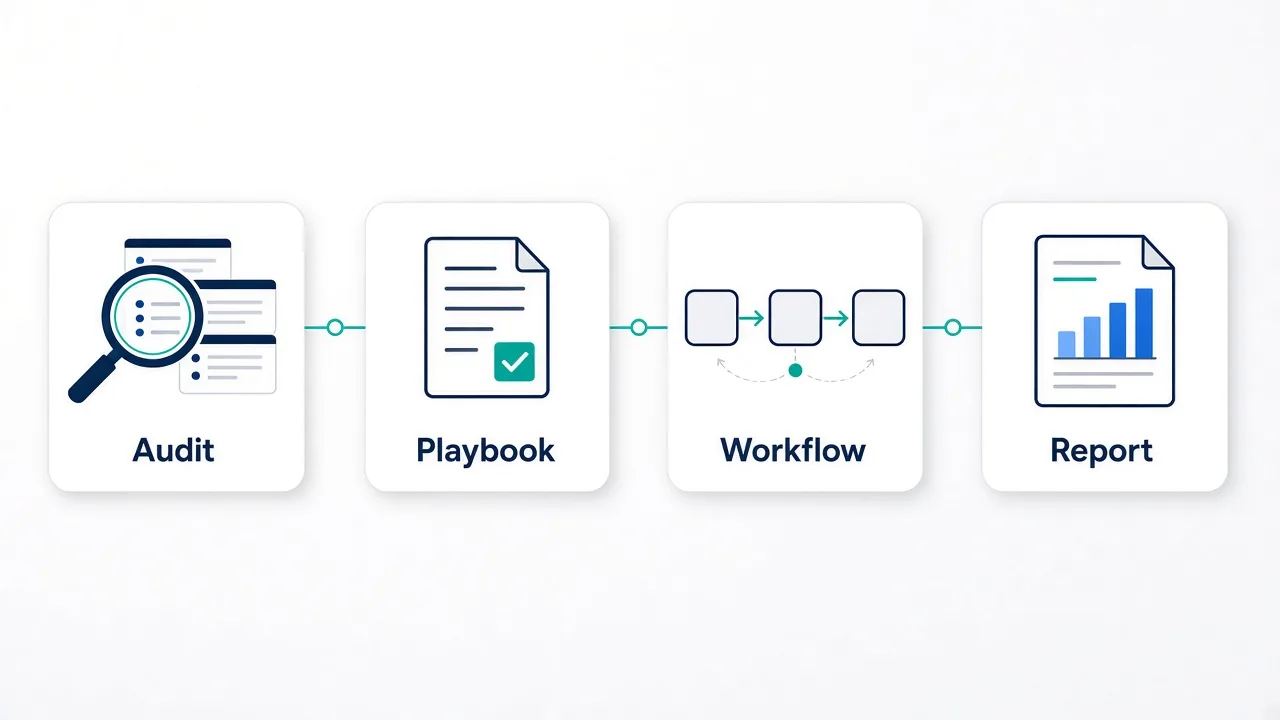
Ask every client, the same way, at a natural moment — after a matter closes or a milestone completes — with no reward tied to what they write. Google's policy allows soliciting genuine reviews without incentives but prohibits offering incentives for reviews and selectively soliciting only positive ones (checked 21 November 2026). The FTC's consumer-review rule, in effect since October 21, 2024, prohibits incentives conditioned on a particular sentiment and can carry civil penalties (checked 21 November 2026).
Practical notes for firms: do not tie a request to the outcome of the matter, do not ask only clients who won, and do not have staff or family post without clearly disclosing the relationship. If your state's professional-conduct rules add advertising or solicitation constraints, follow the stricter standard — we keep workflows conservative by default.
| Do | Don't |
|---|---|
| Thank the reviewer and keep it general | Confirm they were a client, or name the matter |
| Invite them to contact the firm directly | Discuss case facts, outcomes or strategy in public |
| Respond to most reviews, including brief positives | Threaten legal action to pressure a takedown — groundless legal threats to remove reviews are exactly what the FTC rule's review-suppression provision prohibits |
| Report suspected fake reviews through official platform tools | Publicly accuse the reviewer of lying |
Sample scenarios:

Only the platform can remove a review, and only under its own rules. Google removes policy-violating reviews reported through its official flagging tool; evaluation typically takes several days and a one-time appeal exists (checked 21 November 2026). Avvo and other directories run their own moderation processes. We handle the flagging where a review appears to violate platform rules — we never promise the outcome.
Reviews also feed what AI assistants say about your firm. Tools like Google's AI Overviews read the same sources clients do — your site, your profiles, your directory pages — so current, accurate listings and steady genuine reviews are the honest way to improve those summaries. Our AIO and GEO work supports that; we do not promise to control what any model says.
| DIY | Review software | Agency | |
|---|---|---|---|
| Monitoring | Checking profiles manually | Dashboards and alerts | Alerts plus human judgment on what matters |
| Requests | Ad hoc at the front desk | Automated sends | Approved, compliant workflow design |
| Responses | Whoever has time | Templates you still write | Confidentiality-safe playbook you approve |
| Compliance | On you | Partly on you | FTC and platform rules built in |
Practice-management tools and legal marketing platforms can send requests; none of them can decide what a partner should say about a former client's review. That judgment layer is the agency's job.
Beyond the standard checklist — review profiles, rating trends, unanswered reviews, Business Profile categories and duplicate listings — a firm audit also checks: attorney name listings versus firm listings, practice-area categories, Avvo and Martindale profile accuracy, and any existing replies that confirm client status or discuss matters.

Reviews support the map pack and branded search, so this service pairs naturally with Local SEO and Google Maps SEO, and with Organic SEO for the searches that include your firm's name. Also see our SEO for law firms hub and the national reputation management services page. Related industry pages: financial advisors, mortgage brokers, insurance agencies.
See what prospective clients see. Start with a free visibility check of your firm's reviews and directory listings. Get my free AI + Maps visibility check · Book a strategy call
Turn 'near me' searches into calls, direction requests and booked jobs.
Win the map pack across your whole service area, not just your street.
Rank your service pages on page one and keep them there.
See the clearest review and listing gaps before you approve any work.
Prefer to talk? Book a strategy call